20 Oct 2026
Charting Regulatory Milestones That Influenced Modern Root Enhancement Formulas
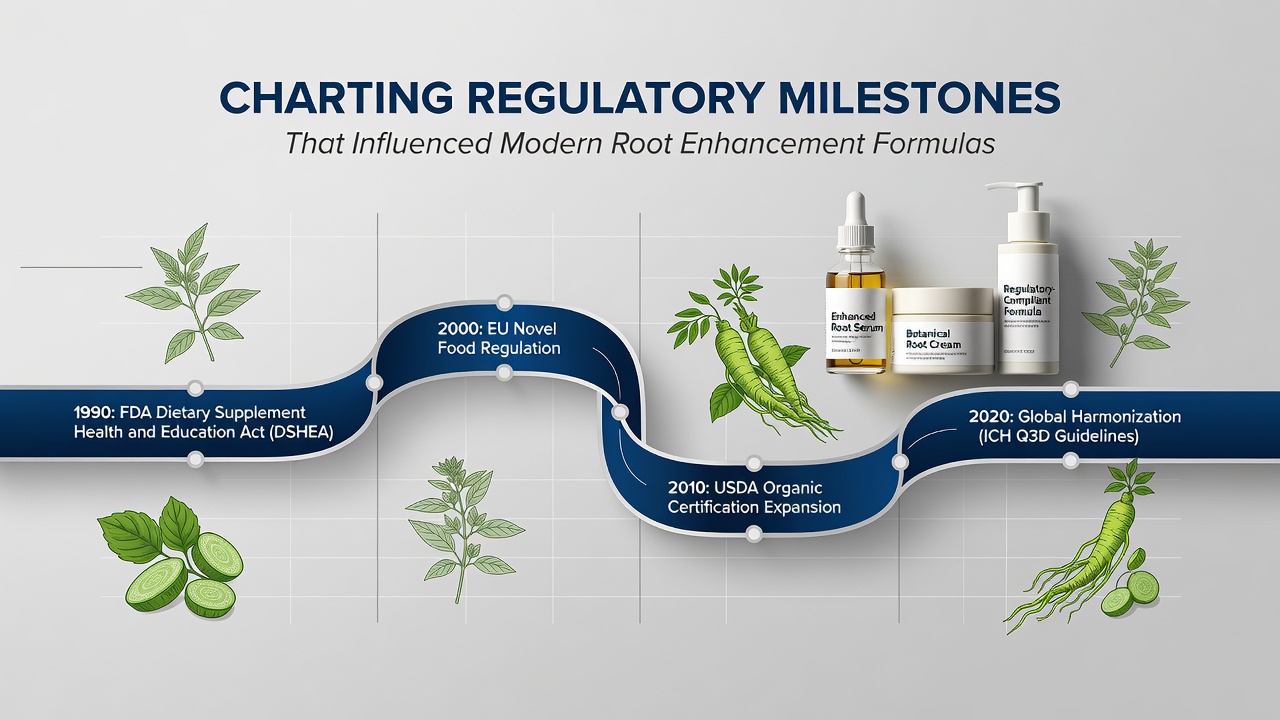
Regulatory frameworks around agricultural inputs have shaped root enhancement formulas through decades of evolving standards for safety, efficacy, and environmental impact. Agencies track active ingredients, application methods, and residue limits, which in turn guide manufacturers toward compliant formulations that meet field performance expectations while satisfying oversight requirements.
Early Foundations in the United States and Europe
The Federal Insecticide, Fungicide, and Rodenticide Act underwent significant amendments in the 1970s that extended oversight to plant growth regulators, prompting developers to document root stimulation claims with supporting data on non-target effects. Those changes established registration pathways that required toxicity testing and environmental fate studies, leading formulators to prioritize compounds with lower persistence profiles. Across the Atlantic, the European Economic Community introduced Directive 91/414 in 1991, which harmonized authorization procedures for plant protection products and included specific provisions for substances that influence root architecture, forcing companies to generate residue and efficacy datasets that aligned with uniform evaluation criteria.
Expansion of Data Requirements in the 2000s
By the early 2000s, the US Environmental Protection Agency refined its risk assessment protocols for biostimulant-type products, incorporating endocrine disruptor screening that applied to many root enhancement active ingredients. Manufacturers responded by reformulating products to exclude or reduce certain synthetic auxins and instead emphasize microbial inoculants or seaweed-derived extracts that cleared the new review thresholds more readily. In Canada, the Pest Management Regulatory Agency aligned its guidelines with these standards around the same period, creating cross-border consistency that encouraged standardized stability testing for liquid and granular root treatments destined for North American markets.
Global Shifts Toward Sustainability Criteria
The European Union’s REACH regulation, fully operational by 2007, added layers of chemical safety reporting that covered many excipients used in root enhancement formulas, resulting in substitution of certain solvents and carriers with lower-hazard alternatives. Australian authorities followed with updates to the Agricultural and Veterinary Chemicals Code in 2013, introducing stricter labeling for products claiming root biomass increases and requiring field trial summaries that demonstrated measurable outcomes under local soil conditions. These layered requirements collectively narrowed the range of permissible ingredients while expanding documentation burdens, which in turn accelerated investment in precision fermentation techniques for producing consistent microbial strains used in modern root formulas.
Recent Developments and Anticipated 2026 Milestones
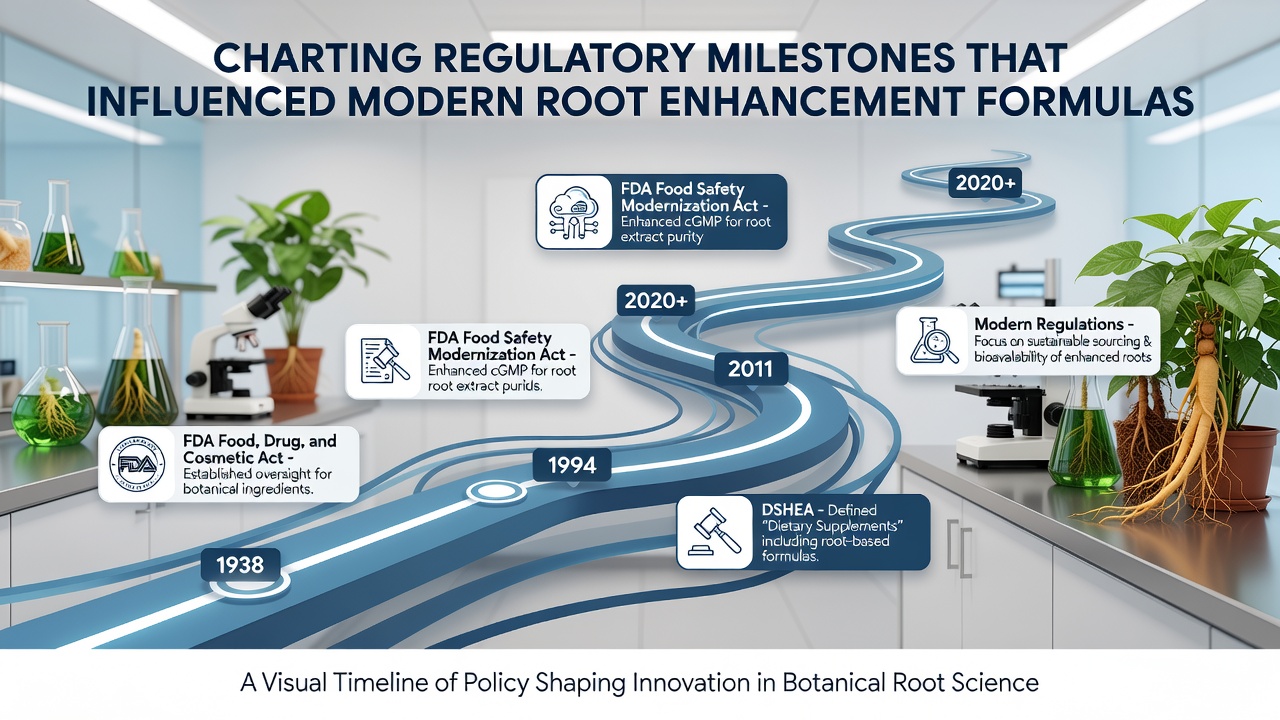
Revisions to the EU Fertilising Products Regulation in 2022 expanded the scope to include biostimulants with explicit root development claims, establishing new conformity assessment modules that demand independent verification of claimed root length and nutrient uptake improvements. Observers note that several jurisdictions, including the United Kingdom’s Health and Safety Executive and New Zealand’s Environmental Protection Authority, have signaled parallel updates expected to take effect in October 2026, focusing on microplastic content in coating materials and requiring disclosure of polymer carriers that may affect soil microbial communities. Data compiled by the Food and Agriculture Organization indicate that these forthcoming standards have already prompted preliminary reformulation work among producers aiming to maintain market access across multiple regions simultaneously.
Effects on Formulation Strategies
Companies have adjusted ingredient selection to meet cumulative regulatory thresholds, favoring plant-derived polymers over synthetic alternatives and investing in encapsulation technologies that reduce active ingredient loading while preserving root penetration performance. Studies referenced by the US Environmental Protection Agency show measurable declines in certain high-volatility compounds historically used in root dips, replaced by slower-release options that align with updated volatilization modeling requirements. Parallel reports from the European Commission’s Joint Research Centre document increased adoption of genomic sequencing to substantiate microbial claims in root enhancement products, a direct response to efficacy data mandates introduced in recent harmonized standards.
Conclusion
Regulatory milestones continue to define acceptable boundaries for root enhancement formulas through layered testing, documentation, and substitution pressures that span multiple continents. The convergence of US, EU, Canadian, and Australian frameworks has produced a more uniform global landscape where formulation decisions reflect both agronomic performance targets and compliance obligations, with further alignment anticipated as October 2026 deadlines approach in several jurisdictions.